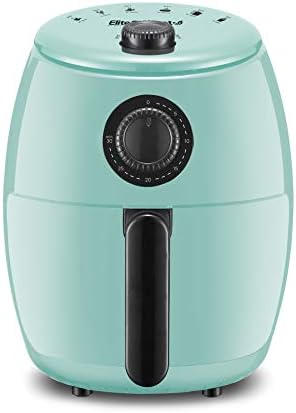

Crispy, golden results with up to 80% less oil — fast, healthy meals from a single basket.
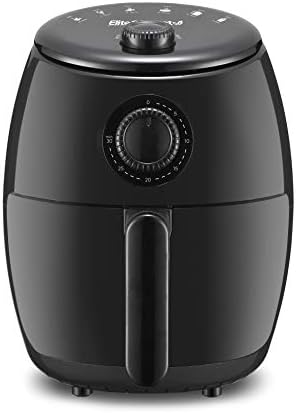
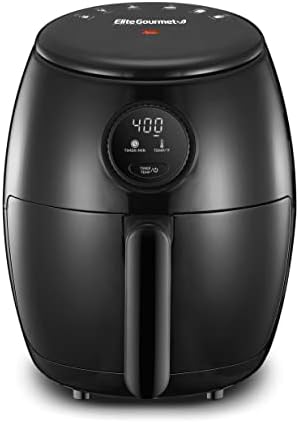
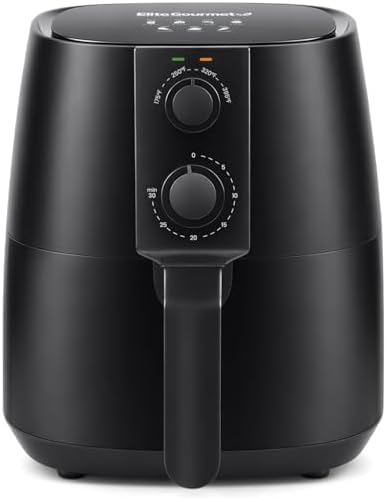
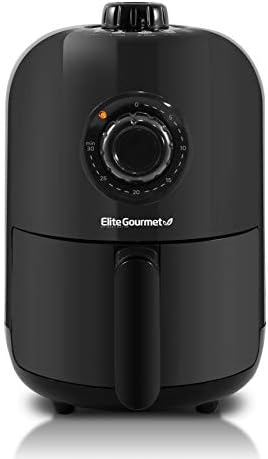
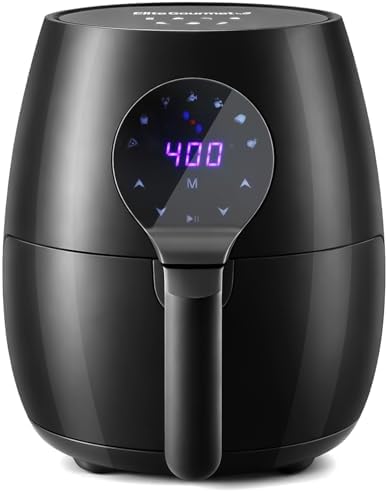
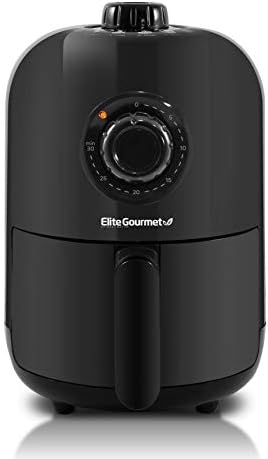
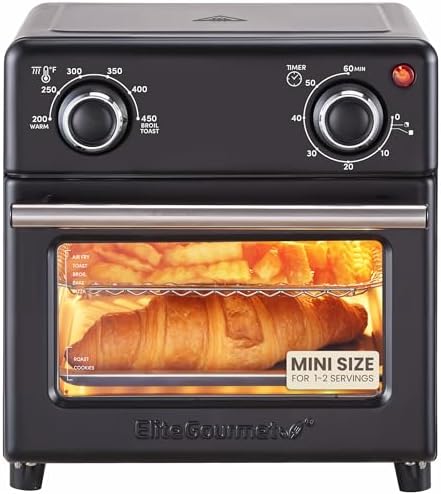
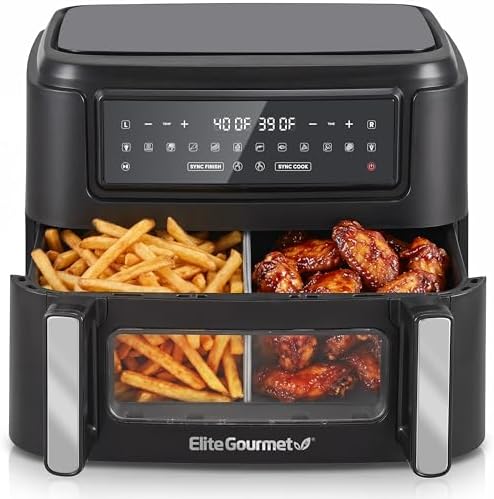
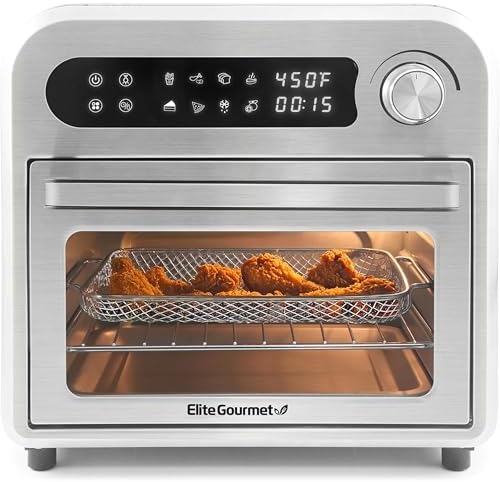
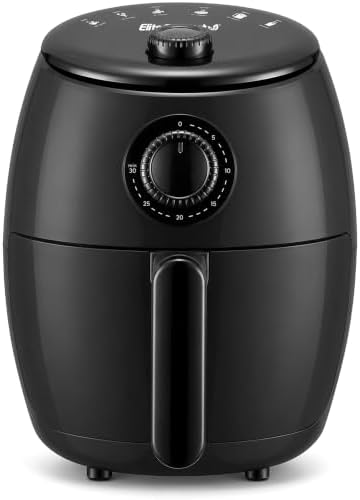
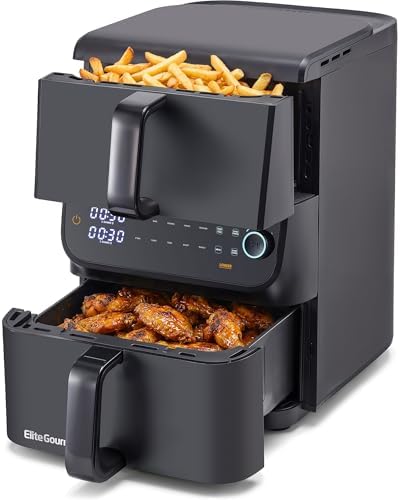
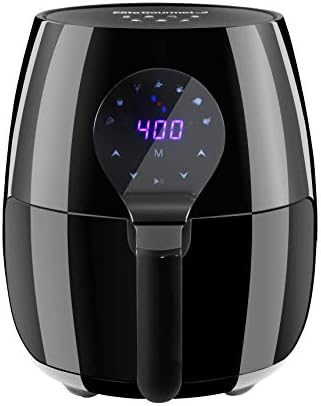
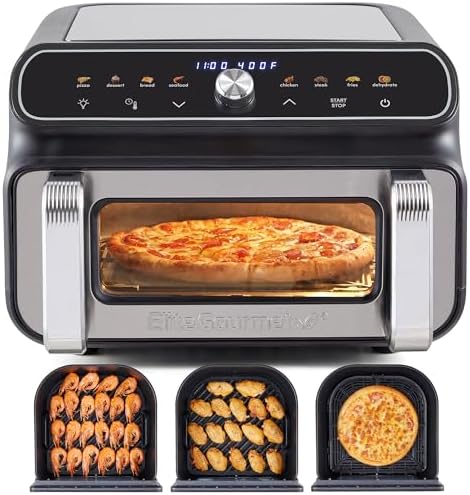
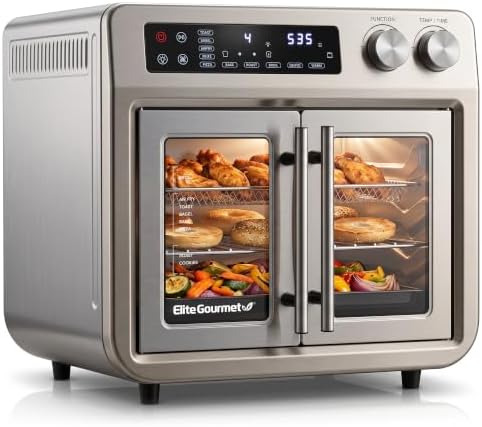
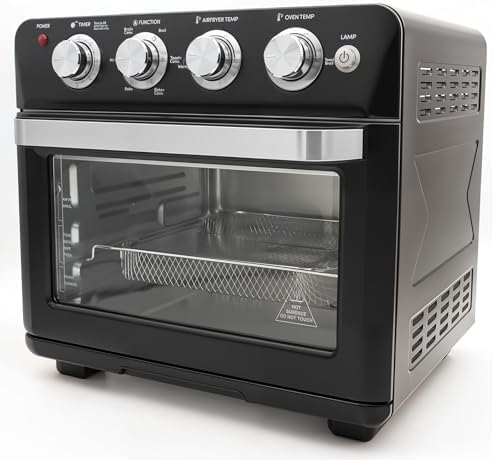
Elite Gourmet's air fryer range splits cleanly into three shapes, and picking the right shape matters far more than picking the right feature list. There are single-basket personal units sized for one person, mid-size baskets for a couple or a small family, and countertop oven versions with racks and a glass door instead of a drawer.
This guide explains which models sit in each group, what the capacity figures actually translate to in food, and where the money goes as you move up the range.
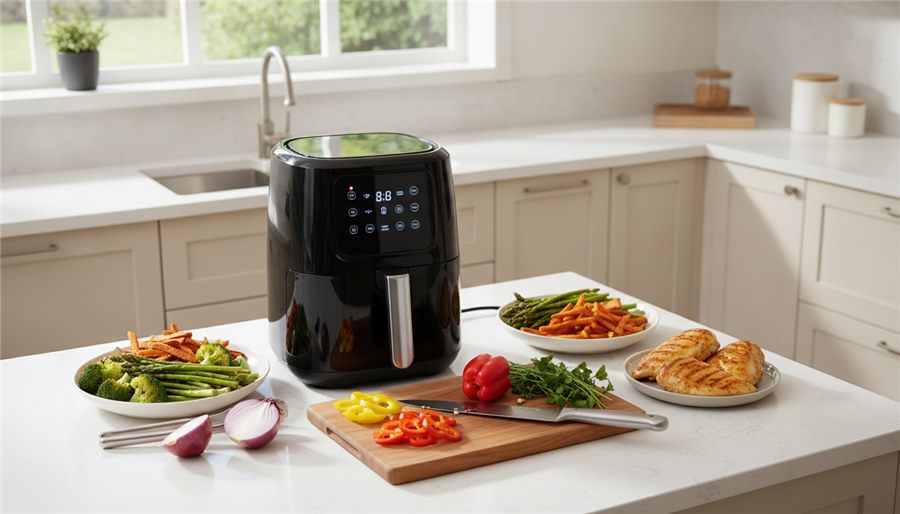
All of these work the same way: a heating element and a fan push hot air around the food fast enough to crisp the outside without submerging it in oil. A light coat of oil on the food still helps, but you are using teaspoons rather than cups.
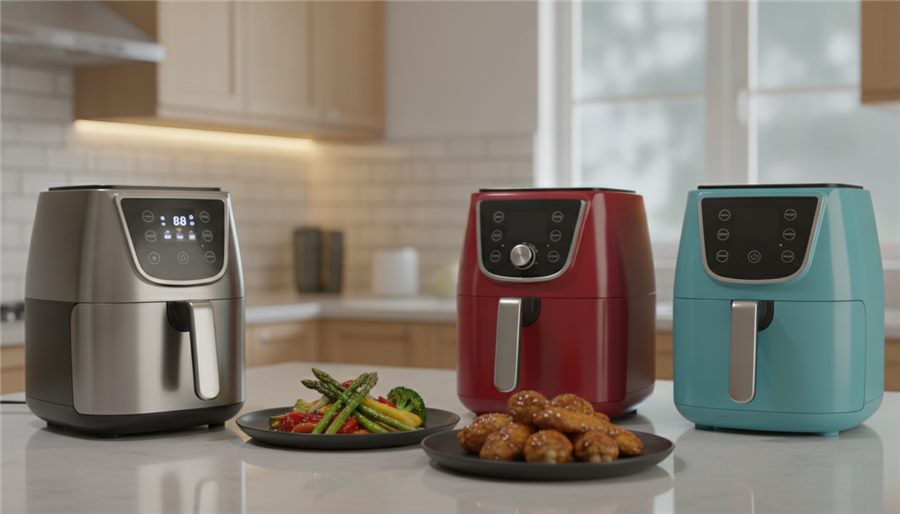
The compact end of the range is the reason a lot of people choose Elite Gourmet at all. These are 1000-watt single-basket units small enough for a dorm shelf, an office break room or a camper, and they are the smallest way into air frying.
The EAF1121 is the smallest at 1.1 quarts — genuinely one serving, enough for a portion of fries or a couple of chicken tenders. The EAF-1121X is the same capacity in an updated housing. Neither will cook for two people in one go, and that is the point: the footprint is tiny.
Step up to 2.1 quarts and you get a usable single-person machine with room for a small batch. The EAF-0201 covers this in black, the EAF-0201BL in mint and the EAF0201X as a revised version. All three use simple dial controls — a timer and a temperature knob, nothing else.
The EAF2612D is the programmable one in this size class, in charcoal grey. If you want preset functions rather than two dials at 2.1 quarts, it is the option in the group. Worth noting that the dial models are not a downgrade for most cooking: presets are shortcuts to temperature and time combinations you can set yourself.
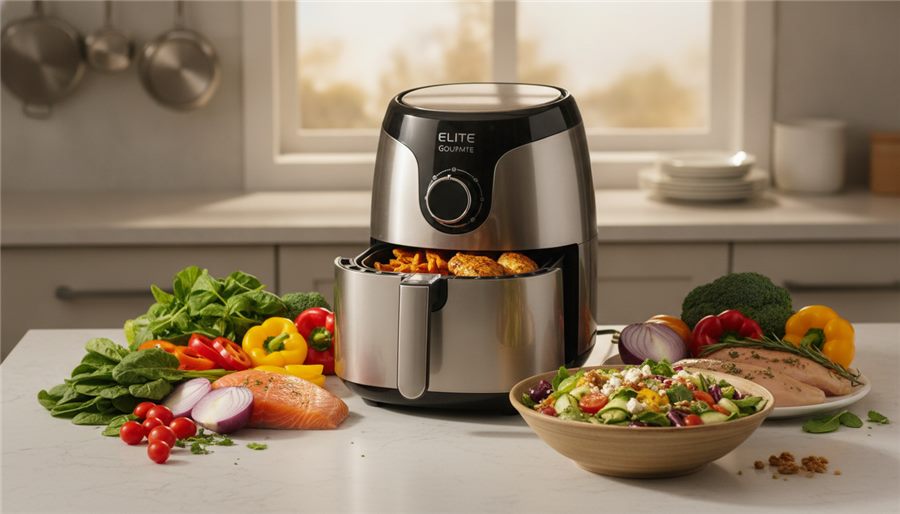
This is the size most households actually want. A four-quart basket cooks for two comfortably and three at a push; above that you are into family batches and the ability to cook a main and a side at once.
The EAF4617 is a 4-quart digital unit at 1350 watts, with adjustable controls rather than a fixed preset wheel. The EAF5317D takes the same wattage up to 5.3 quarts and adds seven menu functions, with a PFOA and PTFE-free basket coating. The EAF-5317DX is the revised version of that model with the same seven-function layout.
Two models solve the "everything finishes at different times" problem in different ways. The EAF1055D is an 11-quart dual-zone oven with two separate baskets and 1600 watts, so you can run chicken at one temperature and vegetables at another and have them land together. The EAF6535 stacks two baskets vertically instead, at 10.5 quarts and 1700 watts, which keeps the counter footprint closer to a single-basket unit.
The honest trade-off with dual-basket designs: you get flexibility, but each individual basket is smaller than a single basket of the same total capacity. If you usually cook one thing in bulk, a single large basket wins. If you cook a whole meal, the dual zone wins.
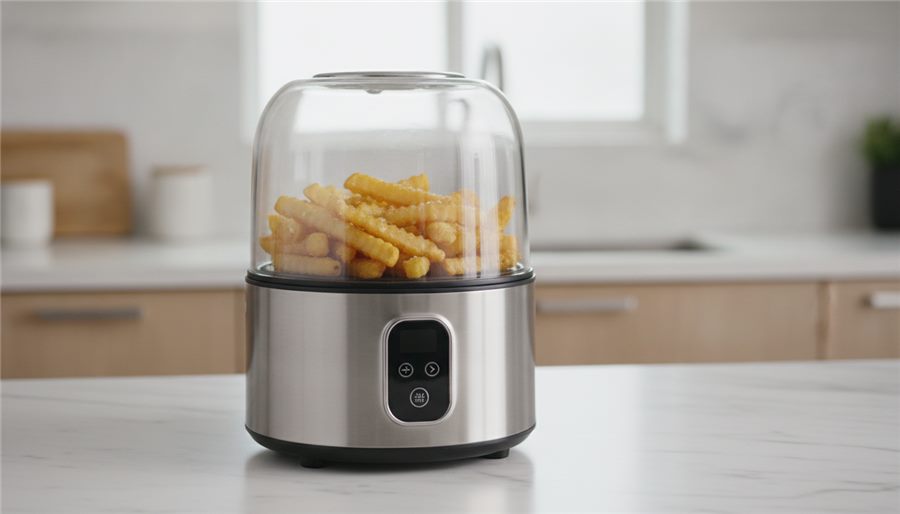
The oven-style models trade the convenience of a pull-out drawer for capacity and visibility. You load wire racks through a glass door, you can see what is happening without interrupting the cycle, and you can cook on two levels at once.
The EAF1010D is a 10-litre programmable oven at 1500 watts with eight menu settings, in stainless steel. It is the smallest of the oven group and the easiest to find space for. The EAF0851B is an 8.5-quart compact mini oven at 800 watts — the lowest-powered model here, which means longer cycles but also the least heat dumped into a small kitchen.
At the large end, the EAF9100 is a 26.5-quart air fryer oven, and there is a 25-litre French door digital model with ten cooking functions where both doors swing outward from the centre. French doors need less clearance in front than a single drop-down door, which matters on a shallow counter.
The EAF2411G is the odd one out: an 11-litre unit that works as both an indoor grill and an air fryer oven, with eight presets. If counter space only allows one appliance and you want grill marks as well as crisping, it is the model that does both jobs.
Quart and litre figures describe the basket volume, not the amount of food that will crisp properly. Air frying needs airflow around every surface, so a basket filled to the brim steams rather than crisps. Plan on filling a basket about two-thirds full, in a single layer.
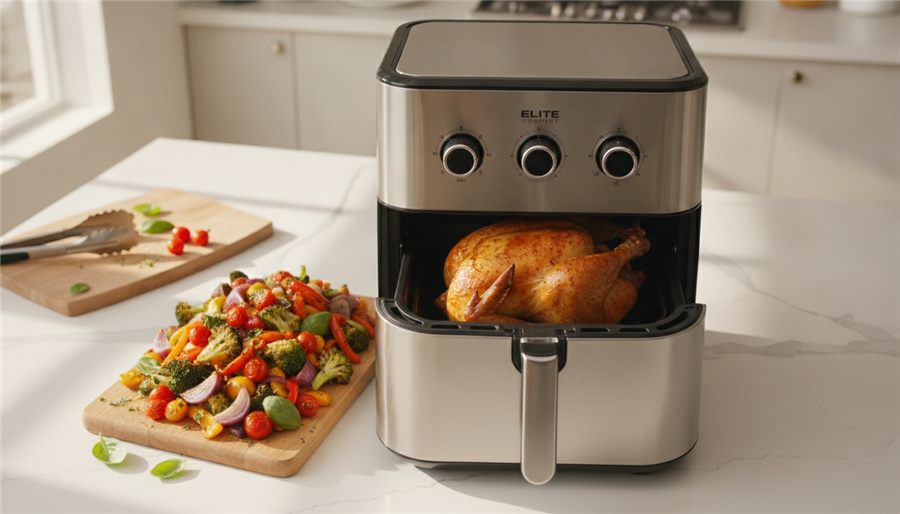
That changes the maths considerably. A 1.1-quart basket holds one portion in a single layer. A 4-quart basket does two portions well. The 10- and 11-quart models are where you can cook for four without doing it in shifts.
Shaking or turning the food halfway through makes a bigger difference than any preset. The surface facing the element browns first, and nothing in the appliance turns the food for you.
| Capacity | Cooks for | Typical use |
|---|---|---|
| 1.1 quart | One portion | Dorm, office, camper |
| 2.1 quart | One person | Small-batch snacks and sides |
| 4 quart | Two people | Everyday main, side in a second batch |
| 5.3 quart | Two to three | Family sides, bone-in chicken pieces |
| 10 to 11 quart | Family of four | Full meal across two zones or racks |
| 25 litre and up | Four plus | Replaces the toaster oven entirely |
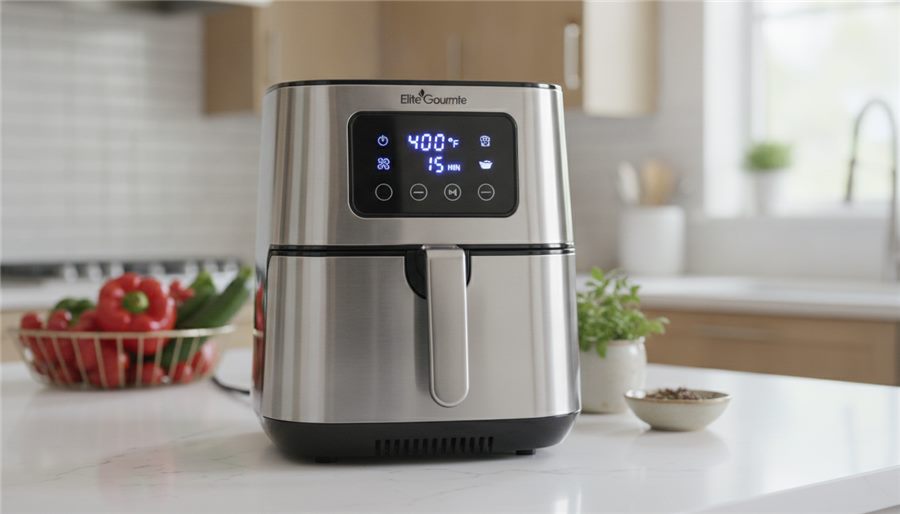
Basket coatings have changed across the range. The newer models specify PFAS-free or PFOA and PTFE-free surfaces, and each product page states which standard that model meets. If this matters to you, check the individual model rather than assuming it applies to the whole line-up.
Whatever the coating, metal utensils and abrasive pads are what destroy it. Most baskets here are dishwasher safe, but hand washing with a soft sponge is what keeps the surface intact over years rather than months. The heating element housing is wiped, never submerged.
The part that genuinely wears is the basket release and the drawer runners on the pull-out models, because they take the mechanical load every cycle. Pulling the drawer by its handle rather than the basket rim is the small habit that extends their life.
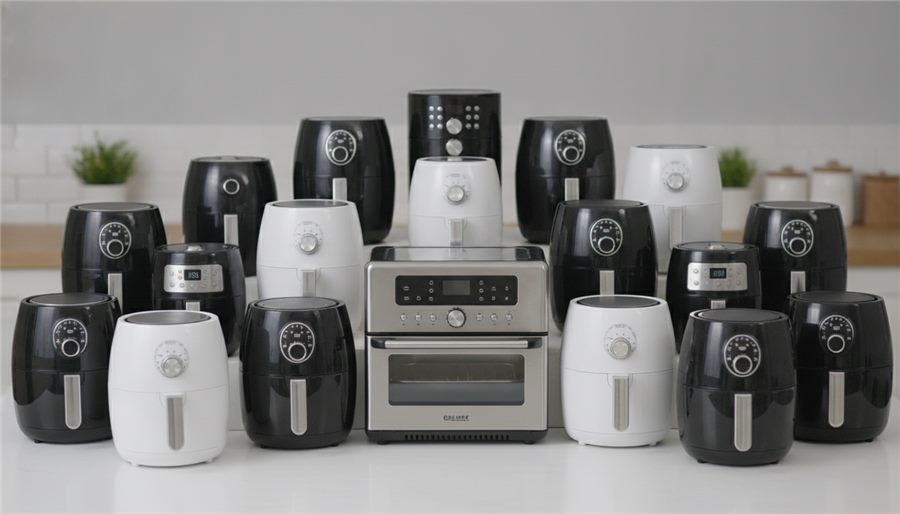
Work from how many people you feed, then counter space, then controls. Capacity is the one decision you cannot work around afterwards — a basket that is too small means cooking in shifts every single time, and a basket that is too large means heating empty space.
Dials versus digital is largely preference. Dials are faster to use and have less to fail; digital presets are convenient if you cook the same handful of things repeatedly and would rather not remember the settings.
The air fryer category page lists every model with its capacity, wattage, colour, current listed price and owner rating, so you can line up the differences directly. Each entry opens a full specification page.
One practical check before you commit: air fryers vent hot air upward and backward, so they need clearance above and behind. Measure the gap under your wall cabinets, not just the counter depth — it is the measurement people forget.