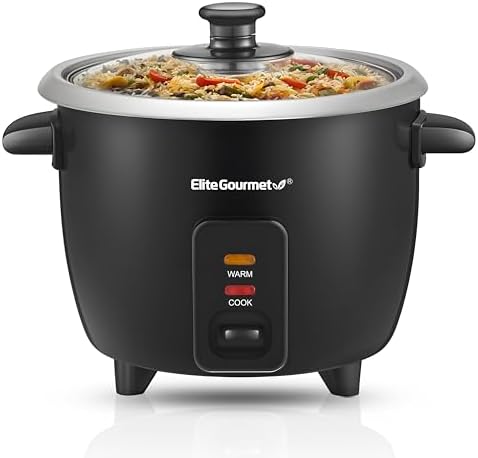

Fluffy rice, grains and one-pot sides with automatic keep-warm — from personal to family size.
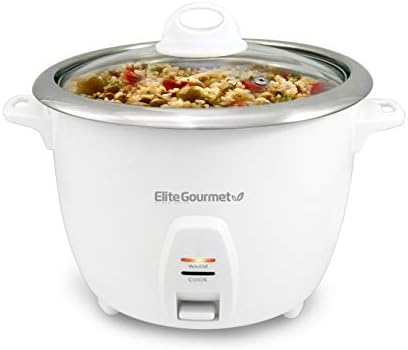
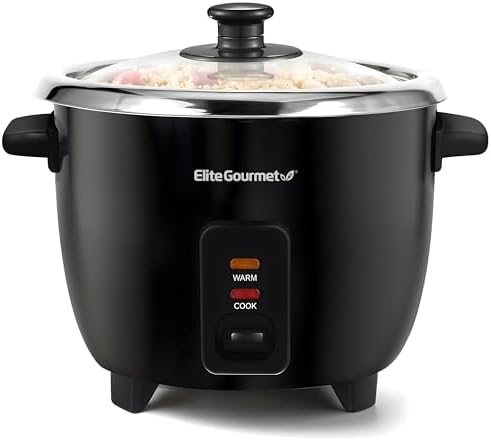
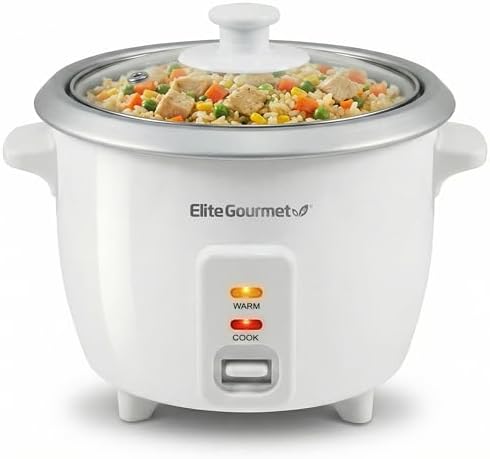
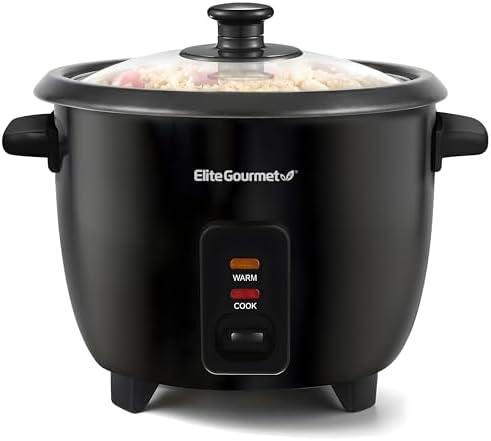
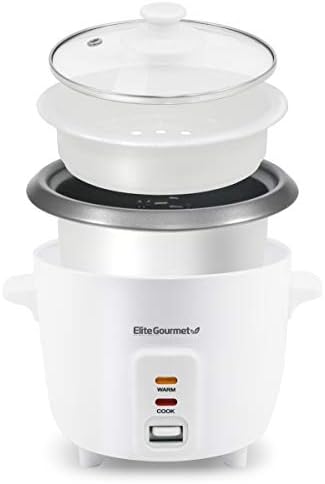
Elite Gourmet's rice cookers are deliberately simple machines. There is no induction heating, no fuzzy-logic algorithm and no pressure function — just a heating plate, a thermostat that senses when the water has gone, and a keep-warm mode that holds the result. That simplicity is the appeal and it is also the limit.
What separates the models is capacity, the pot material, and whether a steam tray is included. This guide covers each of those and explains how to get consistent rice out of a cooker that has no settings to speak of.

The mechanism is worth understanding because it explains everything these cookers do well and badly. Rice boils at the temperature of water. Once the free water is absorbed or evaporated, the temperature in the pot rises past boiling, a thermal switch trips, and the cooker drops to keep-warm. Nothing is measuring the rice — it is measuring the water leaving.

Six cups cooked — roughly three cups of dry rice — is the size that suits most households, and it is where the bulk of the range sits. These are single-switch machines: you load, you press down, it cooks, it switches itself to warm.
The ERC003BX is the black version with a non-stick pot and keep-warm. The ERC-003X is the same cooker in white. Between those two there is no functional difference at all.
The ERC006SS is the one to look at if you want to cook more than rice: it includes a stainless steel steam tray that sits above the water line, so you can steam vegetables or fish over the rice while it cooks. It is the single most useful addition in the range, because it turns one appliance into a complete meal.
Two further models are listed as rice cooker and steamer combinations with non-stick pots, available in white and in black, both at six cups cooked. These cover the same ground as the ERC006SS with a non-stick rather than stainless pot.

The ERC-2010 steps up to ten cups cooked in a stainless finish. That is a meaningful jump: ten cups feeds a large family, covers batch cooking for the week, or handles a gathering without running two cycles.
Capacity on a rice cooker is less flexible than it looks, in both directions. Below about a third full, the thermostat has very little thermal mass to read and small batches can finish slightly dry. Above the maximum line, starchy water foams out from under the lid. If you routinely cook one or two cups, the six-cup models are the better match even though the ten-cup would physically hold it.

Because the cooker reads water rather than rice, the water ratio is the only real control you have — and it is enough. Each rice type needs a different amount, and the cup supplied with the cooker is not a standard measuring cup, so use it for both the rice and the water and the ratios in the manual will work.
Rinse the rice until the water runs close to clear. Surface starch is what makes rice gluey and what causes the foaming that pushes out from under the lid. Two or three changes of water is normally enough; for sticky rice varieties, skip it, because that starch is the point.
Let it stand after the switch clicks. The cooker drops to keep-warm the moment the free water is gone, but the grains at that point are still unevenly hydrated. Ten minutes with the lid closed, then fluff with the paddle rather than a spoon, and the texture is completely different from rice served straight off the switch.
| Rice | Water | Note |
|---|---|---|
| White long grain | Standard ratio in the manual | Rinse until nearly clear |
| Jasmine | Slightly less than standard | Absorbs faster than long grain |
| Basmati | Slightly less, after soaking | Soak twenty minutes for full length |
| Brown rice | Noticeably more | Much longer cycle, bran slows absorption |
| Sticky and sushi rice | Less than standard | Do not rinse the starch away |

On the models that include a steam tray, this is the feature that justifies the counter space. The tray sits above the water line and food in it cooks in the steam leaving the rice, so one appliance and one socket produce a main and a side simultaneously.
Timing is the thing to get right. Vegetables and fish cook far faster than rice, so they go in partway through the cycle rather than at the start — otherwise they are overcooked by the time the switch trips. Firm vegetables like carrots can go in earlier; leafy greens and fish fillets want the last few minutes only.
Avoid strongly flavoured foods in the tray unless you want the rice to take on the flavour, because the steam carries it straight down. That is occasionally the point and more often not.
Non-stick pots in these cookers have one enemy: the paddle scraped hard against the base to free a stuck layer. Soak the pot instead. A pot left standing with warm water for ten minutes releases everything that scrubbing would have taken the coating off along with.
The lid and the steam vent need attention more often than people give them. Starch condenses and dries in the vent, which restricts it and changes how the cooker behaves — rice that used to come out right and suddenly does not is often a blocked vent rather than a worn-out appliance.
The heating plate under the pot should be wiped clean and completely dry before the pot goes back. A grain of rice trapped between the plate and the pot base creates a hot spot and stops the thermostat reading correctly.

Start with how much rice you actually cook in one go, then decide whether you want a steam tray. Those two answers narrow the range to one or two models, and the remaining choice is finish.
Be clear about what these cookers are not. They have no pressure function, no programmable delay and no separate presets for different grains — the thermostat does one job. If you want a machine that handles brown rice and congee on dedicated cycles with a timer, this is not that category of appliance. If you want rice to come out right every evening without thinking about it, it is exactly that.
The rice cooker category page lists each model with its capacity, pot material, colour, current listed price and owner rating side by side. Each entry links to a full specification page.