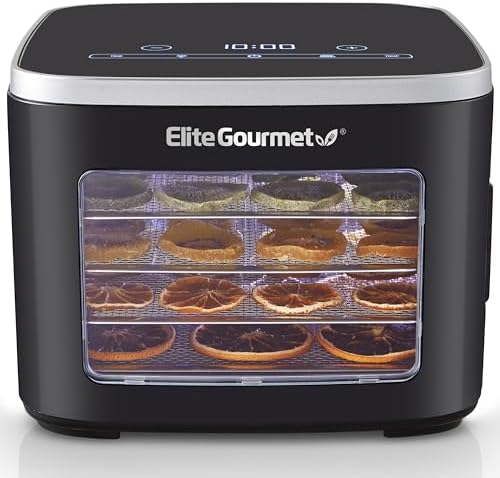

Dry fruit, jerky and herbs at home with adjustable temperature and stackable BPA-free trays.
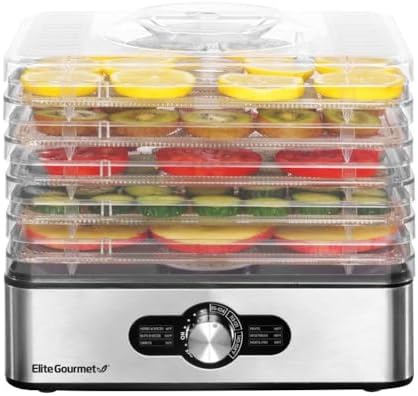
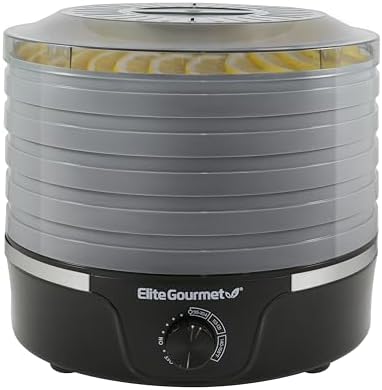
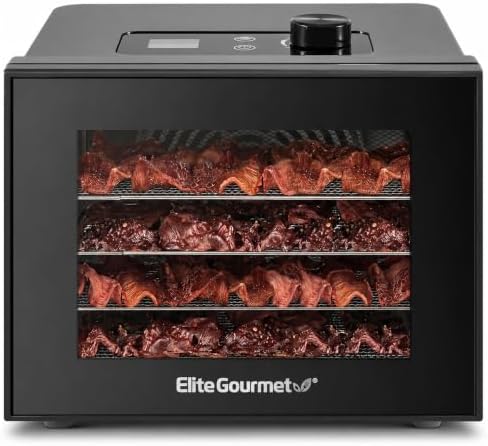
A food dehydrator does one thing: it moves warm, dry air across food slowly enough to pull the water out without cooking it. Everything that distinguishes one model from another comes down to three variables — how many trays it holds, what the trays are made of, and how precisely you can control the temperature and the clock.
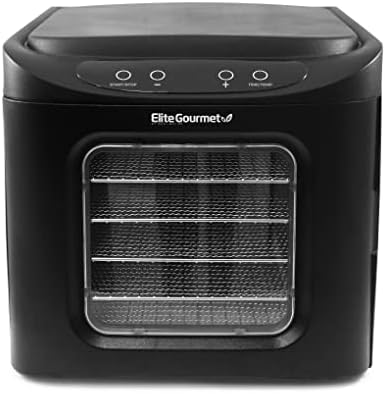
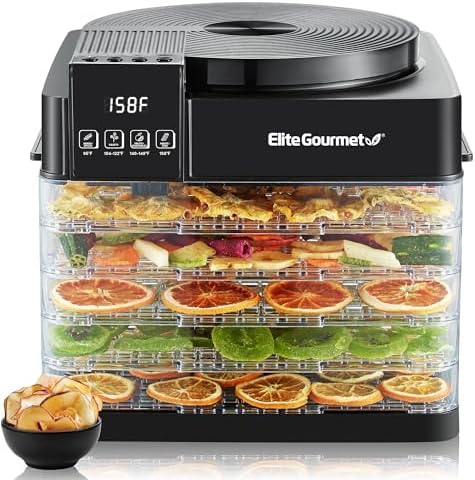
Elite Gourmet's range covers stackable five-tray units at the compact end through to a ten-tray digital machine, with stainless and BPA-free plastic tray options in between. This guide explains which model fits which habit.

The appeal is straightforward. Dried fruit, jerky and herbs cost a great deal more than their raw ingredients, and commercial versions carry preservatives and added sugar that a home batch does not need. Drying also solves a glut — a tree that fruits all at once becomes something you can store.

Five trays is the size most households should start with. It handles a few pounds of fruit or a couple of pounds of meat per run, which is a realistic weekly batch rather than an aspirational one.
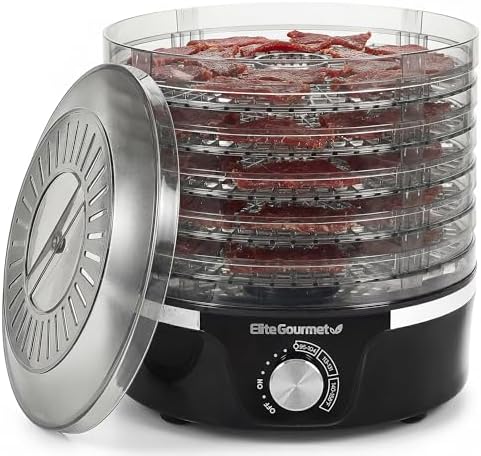
The EFD319X is the straightforward entry: five BPA-free trays at 11.4 inches across, 350 watts, with an adjustable thermostat. The EFD319DKG is the same tray format in black and grey. Both use a dial rather than a display.
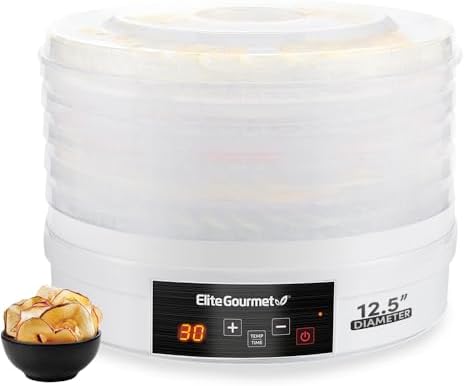
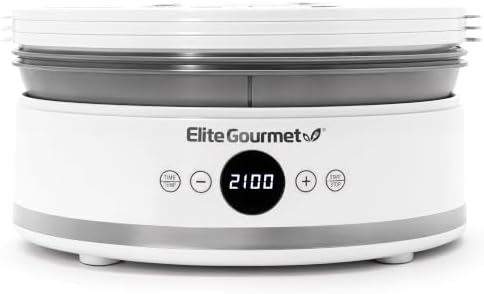
The EFD422 moves up to digital control with five BPA-free trays, which means you set a target temperature and a run time and walk away. The EFD809D adds a keep-warm stage and pairs five trays with a stainless body. The EFD770WD is the white version with five 12.5-inch trays and a 48-hour timer — the largest tray diameter in this group.
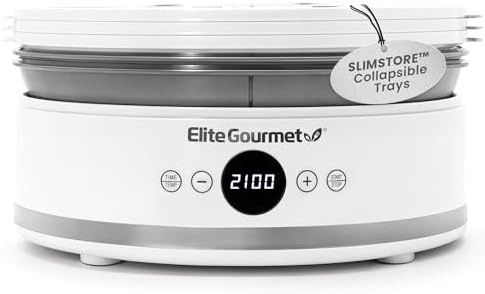
Two models address storage rather than capacity. The EFD329WD and the EFD329WDX use collapsible SlimStore trays that fold down when the machine is not in use. If you dry seasonally — a few weeks in late summer and then nothing until next year — that is the feature worth paying for, because a five-tray dehydrator that does not collapse takes up permanent cupboard space.

Stainless trays cost more and are worth it for two specific jobs: jerky and anything acidic. Marinade and citrus sit on a tray for many hours at temperature, and plastic will eventually stain and hold odour where stainless will not. Stainless also takes a scrubbing that plastic mesh does not.
The EFD3321 and the EFD308 both ship with stainless trays and an adjustable thermostat. The EFD-313B extends to six programmable stainless trays, which is the step up if five is consistently not quite enough.
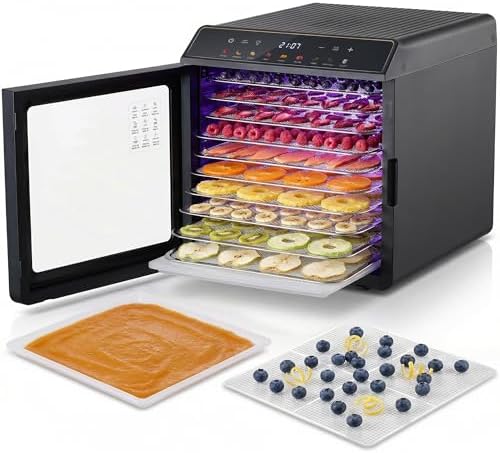
At the top of the range, the EFD1035 is a ten-tray digital machine with a 48-hour timer and a temperature range running from 95 to 167 degrees Fahrenheit. The ten-tray format is a different proposition from the five-tray units — it is for people who process a harvest, make jerky in quantity, or dry for a household that genuinely eats it.
The trade-off at ten trays is airflow. A stacked dehydrator pushes air from a single fan past every tray, and the trays furthest from the element always dry slightly slower. Rotating the stack once during a long run evens this out, and it is the one bit of manual intervention these machines still need.

Setting the temperature wrong is the main way a batch fails, and it fails in a non-obvious way. Too high and the outside of the food hardens into a shell before the inside has dried — the piece looks finished, stores badly and spoils from the centre. The term for it is case hardening, and it is why patience beats heat.
Herbs and leafy greens want the lowest setting, because the volatile oils that carry the flavour evaporate along with the water if you push the heat. Fruit sits in the middle of the range. Jerky needs the top of the range, because meat has a food-safety threshold that herbs do not.
Thickness matters as much as temperature. Slices need to be even, or the thin pieces finish while the thick ones are still wet, and you cannot tell by looking at the tray. A mandoline or a steady hand is the difference between a batch that stores and a batch that moulds in a jar.
| Food | Heat setting | What to watch |
|---|---|---|
| Herbs and leaves | Lowest | Aroma lost if run too hot |
| Apple and pear slices | Low to middle | Even thickness, or they finish unevenly |
| Berries and stone fruit | Middle | Skins need piercing or they stay wet inside |
| Vegetables for storage | Middle | Blanch first for better colour |
| Jerky | Highest | Food-safety temperature is not optional |

Timers are a guide, not an answer, because how long a batch takes depends on the humidity in your kitchen and the water content of the fruit you happened to buy. The test is mechanical rather than visual.
Fruit should be leathery and pliable with no bead of moisture when you tear a piece in half. Vegetables should be brittle. Herbs should crumble between your fingers. Jerky should crack when bent but not snap clean through.
Then condition it. Pack the cooled batch loosely in a sealed jar and leave it a few days, shaking it occasionally. Any residual moisture redistributes between pieces instead of concentrating in one, and if you see condensation on the glass the batch needs more time in the machine. Skipping this step is why home-dried fruit sometimes spoils in storage despite looking perfect coming off the tray.

Three questions settle it. How much do you dry at a time — five trays or ten? What are you drying — if jerky or citrus feature regularly, choose stainless trays. And where will it live between uses — if the answer is a full cupboard, the collapsible SlimStore models solve a real problem.
Digital control is a genuine convenience on long runs, because a 48-hour timer means a batch that starts in the evening does not need you to remember it. Dial models do the same job and have less to go wrong.
The dehydrator category page lists every model with its tray count, tray material, colour, current listed price and owner rating. Each entry opens the full specification.
One practical note: dehydrators run for many hours and they are not silent, because the fan never stops. A garage, a utility room or a spare counter away from the living space is a better home for one than a kitchen island, particularly for overnight batches.