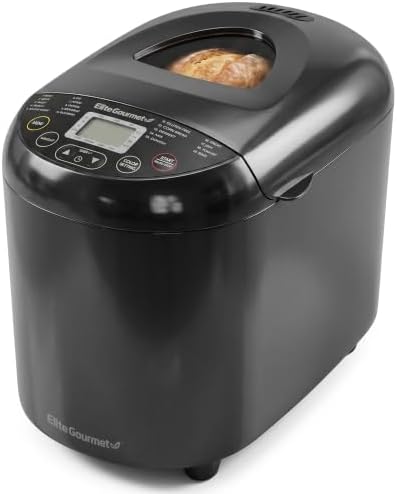

Fresh homemade loaves with programmable presets — from gluten-free to French, right on the counter.
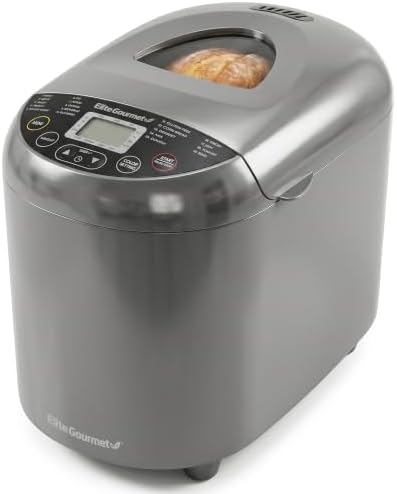

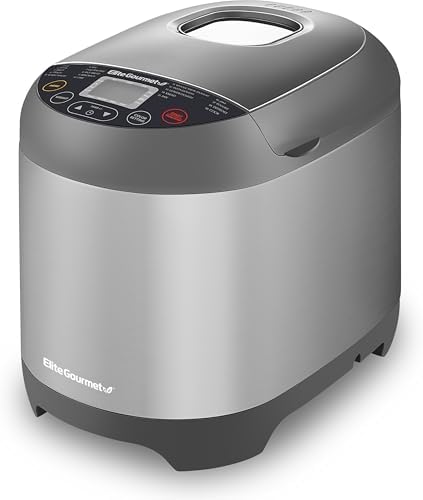
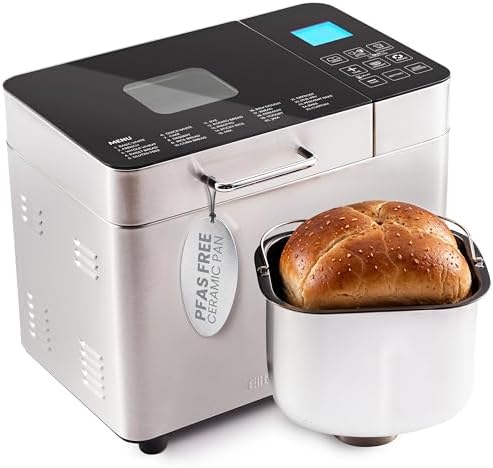
Elite Gourmet's bread maker line-up is unusually simple to navigate, because it is essentially one machine offered in different finishes with two different pan materials. Understanding that one fact removes most of the confusion about which model to pick.
Every unit in the range bakes a two-pound loaf, offers three loaf-size settings and runs a programmable menu of baking functions. What changes between models is the colour of the housing and whether the pan is conventional non-stick or the brand's PFAS-free ceramic coating.

A bread maker is the one appliance in a kitchen that genuinely replaces a skill. It kneads, proves at a controlled temperature, knocks back and bakes without you touching it, and the controlled proving stage is the part that is hard to replicate on a counter in a cold kitchen.

The EBM8103B is the baseline: a two-pound programmable machine in black with three loaf sizes and a nineteen-preset menu. The EBM8103SS is the same machine in stainless steel and the EBM8103M is the same machine in mint. If you are choosing between those three, you are choosing a colour.
The EBM8103CG is where the specification actually changes. It is the grey version, and it ships with the PFAS-free Ceralast ceramic pan rather than a conventional non-stick one. The EBM8224MM pairs that same ceramic pan with a stainless housing and a nineteen-function menu.
So the real decision is two questions wide: which finish suits your kitchen, and do you want the ceramic pan. Everything else about the baking cycle is shared.
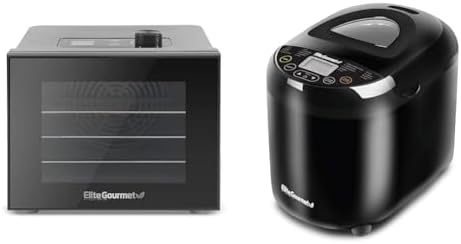
There is also a combination unit in the range that pairs a four-tray food dehydrator with a programmable bread maker in one housing. It suits a kitchen where counter space is the binding constraint and both jobs come up occasionally, rather than one where either job is a weekly routine.

This is the only specification difference that changes how the machine behaves, so it is worth being clear about it.
Conventional non-stick releases a loaf very reliably and is the cheaper option. Its weakness is mechanical: the kneading paddle sits in the bottom of the pan and turns against the surface for the whole knead cycle, and over years that is what wears a non-stick coating thin.
The PFAS-free ceramic pan is harder-surfaced and does not rely on a fluoropolymer coating at all. In exchange, ceramic is slightly less slippery when new, so a very wet dough can cling more at first. Both pans are hand-wash items regardless of what the manual permits — the paddle spindle is the part you do not want sitting in a dishwasher.
If you bake weekly and expect to keep the machine for years, the ceramic pan is the one that ages better. If you bake occasionally, the difference will not show.

A nineteen-item menu looks intimidating and mostly is not. The presets differ in three variables: how long the dough proves, how hot and long it bakes, and whether there is a second knead.
Basic is the setting for a standard white or light wheat loaf and the one you will use most. Whole wheat extends the proving time, because wholemeal flour is slower to rise and needs it. French runs a longer, cooler bake for a crisper crust and a more open crumb.
Gluten-free is the preset that genuinely differs rather than just adjusting timings: gluten-free doughs must not be knocked back, so the cycle skips the second knead entirely. Using the basic setting for a gluten-free loaf is the single most common reason one comes out dense.
Dough mixes and proves but does not bake, which is what you want for rolls, pizza bases or anything you intend to shape by hand. Jam uses the pan as a heated stirring vessel and has nothing to do with bread at all.
The delay timer is the feature that changes the appliance from useful to habitual. Loading the pan at night for a loaf that finishes at breakfast is the reason these machines stay on counters instead of going into cupboards. One caveat: do not use the delay with recipes containing milk, eggs or fresh dairy, because those sit at room temperature for hours before the cycle starts.

Bread makers are more sensitive to measurement than almost any other appliance, because the machine cannot see the dough and adjust. A loaf that collapses in the middle or fails to rise is nearly always a ratio problem rather than a fault.
Weigh the flour rather than scooping it. A cup of flour varies substantially depending on how compacted it is, and a bread maker recipe has no slack to absorb that. Liquid should be lukewarm, not hot — water hot enough to feel warm on the wrist kills yeast.
Load in the order the manual specifies, which is normally liquids first, then flour, then yeast on top where it stays dry until mixing starts. Salt sitting directly against yeast inhibits it, so keep them on opposite sides of the pan.
| Symptom | Usual cause | Fix |
|---|---|---|
| Loaf sank in the middle | Too much liquid or yeast | Reduce liquid slightly, weigh the yeast |
| Dense, barely risen | Dead yeast or cold liquid | Fresh yeast, lukewarm water |
| Gluten-free loaf is heavy | Wrong preset selected | Use the gluten-free cycle, not basic |
| Crust too pale | Light crust setting | Select medium or dark crust |
| Paddle baked into the loaf | Normal on all machines | Remove with the supplied hook once cool |

The households that get the most from these machines are the ones with a dietary reason to bake: gluten-free, low-salt, or simply wanting to know exactly what is in the loaf. Shop-bought alternatives in those categories are expensive and inconsistent, and a bread maker removes both problems.
It also suits anyone who wants fresh bread on a schedule rather than as a project. The delay timer does the work overnight and the machine is a one-pan clean-up afterwards.
It suits you less if you want artisan results. A bread maker bakes a tall, square loaf with a soft crust and a paddle hole in the base — that is the shape of the pan and it cannot be anything else. For a free-form boule with a blistered crust you want the dough cycle and your own oven.

Counter space is the other consideration. These machines are tall, they need clearance for the lid to open fully, and they vent steam from the top during the bake. A cabinet directly overhead is a problem.
Decide on the pan first, since that is the only functional difference: ceramic if you plan to bake regularly for years, conventional non-stick if the machine will see occasional use. Then pick the finish that fits your kitchen.
The bread maker category page lists each model with its pan type, colour, current listed price and owner rating side by side. Every entry links to a full specification page.
Before buying, measure the height of the space you intend to put it in with the lid open, and check that the vent on top is not going to sit under a cabinet. Those two measurements decide where the machine lives, and a bread maker that has to be lifted out of a cupboard before every use does not get used.